
Philippi East: Can technology turn a crime hotspot into an industrial lifeline?
The Cape Chamber of Commerce and Industry is betting that surveillance technology, business collaboration and stronger public-private partnerships can help reclaim Philippi East’s industrial economy from crime — but the experiment raises bigger questions about policing, inequality and who gets to feel safe in Cape Town.
By Staff Reporter
For decades, Philippi East has occupied an uncomfortable position in Cape Town’s economic geography: strategically located, surrounded by major transport routes and close to the airport, yet burdened by poverty, inadequate infrastructure and persistent crime.
Now the area’s business community is attempting something different.
The Cape Chamber of Commerce and Industry has established the Philippi East Industrial Chapter, bringing businesses together in an attempt to make the industrial area safer, more functional and attractive to investment.
The chapter grew out of the former WOSA Philippi Business Association, which represented 19 of roughly 37 businesses in the area. The Chamber says the industrial and commercial zone has existed for more than 70 years, with its proximity to major roads, the airport and a large potential workforce making it an area with significant economic potential.
But potential is not enough.
For businesses operating in Philippi East, security has become an economic issue as much as a policing issue. Crime affects employees travelling to work, the movement of goods, customers, operating hours and ultimately the willingness of companies to invest.
The challenge is broader than the industrial properties themselves. Philippi is surrounded by communities facing high levels of unemployment, poverty and inadequate services, while gang violence and extortion have repeatedly disrupted economic and public life.
The Mail & Guardian has previously reported on how crime and extortion in Philippi have affected businesses and even prevented municipal workers from entering parts of the area.
Against this backdrop, the Chamber’s latest intervention is placing technology at the centre of its strategy.
A high-tech response to an old problem
Through the “From Fear to Flourish” initiative, the Chamber is working with Business Against Crime and other stakeholders to introduce a technology-driven approach to policing and crime prevention.
Artificial intelligence-assisted facial recognition and automatic number plate recognition systems have been deployed in the Philippi East industrial area. The systems are intended to support policing operations by identifying vehicles and people of interest and allowing information to be shared more rapidly between stakeholders.
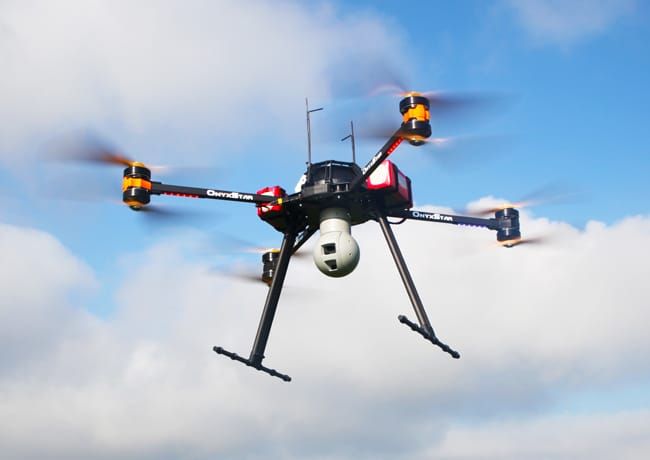
The project has also incorporated drone surveillance, including aerial monitoring using thermal imaging.
At the centre of the initiative is a control-room model intended to bring together CCTV feeds, intelligence, analytics and operational responses. The project team has also committed to establishing a “Fusion Centre” where information can be shared between different agencies and stakeholders in real time.
It represents a significant shift in the way business-led crime prevention is being approached.
Instead of relying exclusively on conventional patrols and reactive policing, the initiative seeks to build an information network in which technology identifies threats and helps direct human intervention.
But technology cannot, by itself, fix a broken urban environment.
The geography of insecurity
The industrial area’s location should make it an obvious candidate for investment.
City planning documents have identified Philippi’s proximity to the Cape Town International Airport, the N2, R300, Sheffield Road and Govan Mbeki Road as important economic advantages. The area also contains industrial land with development potential.
Yet the same planning documents acknowledge the contradiction at the heart of Philippi’s development story.
Crime, poor infrastructure, inadequate lighting, illegal dumping and weak urban management have contributed to the area’s reputation as a difficult place in which to operate.
That creates a vicious cycle.
Crime discourages investment. A lack of investment limits employment opportunities. Poor economic conditions contribute to social instability. And instability makes it harder to attract the businesses and infrastructure capable of transforming the area.
The Chamber’s approach therefore extends beyond cameras and surveillance.
Its stated priorities include bringing government and other stakeholders together, improving roads, supporting business retention and expansion, and connecting local businesses to wider regional and value-chain development initiatives.
The numbers tell another story
The latest available crime data suggest that there has been some movement in the right direction, although the situation remains severe.
The Philippi East police precinct recorded 3,543 reported crimes between April 2025 and March 2026 — a 7.4% decline compared with the previous year. Murder declined by 14.7%, while aggravated robbery fell substantially.
But the absolute numbers remain troubling.
The precinct recorded 197 murders during the period, while aggravated robbery accounted for 642 cases and drug-related crime for 716.
A reduction in crime does not necessarily translate into a perception of safety for residents, workers or businesses. For companies deciding whether to expand, perceptions of risk can matter almost as much as the statistics.
That is why the Philippi East experiment is significant.
If the technology-led model can demonstrate that faster detection, better intelligence and coordinated responses produce measurable improvements, it could offer a template for other industrial areas struggling with crime.
From cameras to economic recovery
The Chamber and its partners describe Philippi East as a proof-of-concept project.
The objective is not simply to install surveillance equipment but to build a model that can eventually be replicated elsewhere.
The project team has said it intends to measure system alerts, response times, interventions and arrests linked to verified triggers. This evidence could eventually be used to determine whether the investment produces tangible crime-prevention results.
That emphasis on measurement is important.
South Africa has no shortage of security initiatives. What is often missing is a clear assessment of which interventions actually reduce crime, improve response times and restore public confidence.
Philippi East provides an opportunity to test that proposition.
But it also presents a warning.
A sophisticated surveillance system cannot substitute for functioning public institutions, adequate policing, reliable municipal services, good roads, lighting and meaningful economic opportunities.
Nor can industrial security be separated from the communities surrounding the factories and warehouses.
Workers do not disappear when they leave the industrial zone. Neither do the social conditions that produce vulnerability to crime.
A test of public-private policing
The most consequential aspect of the Philippi East initiative may therefore be less about facial recognition or drones than about cooperation.
The project brings together business, community stakeholders, SAPS, Business Against Crime and other partners in an attempt to create a shared response to a problem that no single institution has been able to solve.
That is both its strength and its greatest test.
Public-private security partnerships can bring resources, expertise and technology into areas where government capacity is stretched. But they must also remain accountable to the communities they are intended to protect.
The challenge is to ensure that Philippi East does not simply become an island of heavily protected businesses surrounded by communities that remain excluded from the benefits of economic development.
The real measure of success will be whether workers can travel safely to their jobs, whether businesses can operate without paying protection money, whether roads and public spaces become functional again, and whether investors begin to see Philippi East not as a risk but as an opportunity.
For now, the Cape Chamber’s message is clear: Philippi East cannot wait for crime to disappear before economic development begins.
The gamble is that economic activity, better urban management, community participation and technology-enabled policing can instead reinforce one another.
If that works, Philippi East could become more than a crime-prevention project.
It could become a test of whether Cape Town can reclaim an industrial economy from the conditions that have held it back for generations.
By Staff Reporter
For decades, Philippi East has occupied an uncomfortable position in Cape Town’s economic geography: strategically located, surrounded by major transport routes and close to the airport, yet burdened by poverty, inadequate infrastructure and persistent crime.
Now the area’s business community is attempting something different.
The Cape Chamber of Commerce and Industry has established the Philippi East Industrial Chapter, bringing businesses together in an attempt to make the industrial area safer, more functional and attractive to investment.
The chapter grew out of the former WOSA Philippi Business Association, which represented 19 of roughly 37 businesses in the area. The Chamber says the industrial and commercial zone has existed for more than 70 years, with its proximity to major roads, the airport and a large potential workforce making it an area with significant economic potential.
But potential is not enough.
For businesses operating in Philippi East, security has become an economic issue as much as a policing issue. Crime affects employees travelling to work, the movement of goods, customers, operating hours and ultimately the willingness of companies to invest.
The challenge is broader than the industrial properties themselves. Philippi is surrounded by communities facing high levels of unemployment, poverty and inadequate services, while gang violence and extortion have repeatedly disrupted economic and public life.
The Mail & Guardian has previously reported on how crime and extortion in Philippi have affected businesses and even prevented municipal workers from entering parts of the area.
Against this backdrop, the Chamber’s latest intervention is placing technology at the centre of its strategy.
A high-tech response to an old problem
Through the “From Fear to Flourish” initiative, the Chamber is working with Business Against Crime and other stakeholders to introduce a technology-driven approach to policing and crime prevention.
Artificial intelligence-assisted facial recognition and automatic number plate recognition systems have been deployed in the Philippi East industrial area. The systems are intended to support policing operations by identifying vehicles and people of interest and allowing information to be shared more rapidly between stakeholders.
The project has also incorporated drone surveillance, including aerial monitoring using thermal imaging.
At the centre of the initiative is a control-room model intended to bring together CCTV feeds, intelligence, analytics and operational responses. The project team has also committed to establishing a “Fusion Centre” where information can be shared between different agencies and stakeholders in real time.
It represents a significant shift in the way business-led crime prevention is being approached.
Instead of relying exclusively on conventional patrols and reactive policing, the initiative seeks to build an information network in which technology identifies threats and helps direct human intervention.
But technology cannot, by itself, fix a broken urban environment.
The geography of insecurity
The industrial area’s location should make it an obvious candidate for investment.
City planning documents have identified Philippi’s proximity to the Cape Town International Airport, the N2, R300, Sheffield Road and Govan Mbeki Road as important economic advantages. The area also contains industrial land with development potential.
Yet the same planning documents acknowledge the contradiction at the heart of Philippi’s development story.
Crime, poor infrastructure, inadequate lighting, illegal dumping and weak urban management have contributed to the area’s reputation as a difficult place in which to operate.
That creates a vicious cycle.
Crime discourages investment. A lack of investment limits employment opportunities. Poor economic conditions contribute to social instability. And instability makes it harder to attract the businesses and infrastructure capable of transforming the area.
The Chamber’s approach therefore extends beyond cameras and surveillance.
Its stated priorities include bringing government and other stakeholders together, improving roads, supporting business retention and expansion, and connecting local businesses to wider regional and value-chain development initiatives.
The numbers tell another story
The latest available crime data suggest that there has been some movement in the right direction, although the situation remains severe.
The Philippi East police precinct recorded 3,543 reported crimes between April 2025 and March 2026 — a 7.4% decline compared with the previous year. Murder declined by 14.7%, while aggravated robbery fell substantially.
But the absolute numbers remain troubling.
The precinct recorded 197 murders during the period, while aggravated robbery accounted for 642 cases and drug-related crime for 716.
A reduction in crime does not necessarily translate into a perception of safety for residents, workers or businesses. For companies deciding whether to expand, perceptions of risk can matter almost as much as the statistics.
That is why the Philippi East experiment is significant.
If the technology-led model can demonstrate that faster detection, better intelligence and coordinated responses produce measurable improvements, it could offer a template for other industrial areas struggling with crime.
From cameras to economic recovery
The Chamber and its partners describe Philippi East as a proof-of-concept project.
The objective is not simply to install surveillance equipment but to build a model that can eventually be replicated elsewhere.
The project team has said it intends to measure system alerts, response times, interventions and arrests linked to verified triggers. This evidence could eventually be used to determine whether the investment produces tangible crime-prevention results.
That emphasis on measurement is important.
South Africa has no shortage of security initiatives. What is often missing is a clear assessment of which interventions actually reduce crime, improve response times and restore public confidence.
Philippi East provides an opportunity to test that proposition.
But it also presents a warning.
A sophisticated surveillance system cannot substitute for functioning public institutions, adequate policing, reliable municipal services, good roads, lighting and meaningful economic opportunities.
Nor can industrial security be separated from the communities surrounding the factories and warehouses.
Workers do not disappear when they leave the industrial zone. Neither do the social conditions that produce vulnerability to crime.
A test of public-private policing
The most consequential aspect of the Philippi East initiative may therefore be less about facial recognition or drones than about cooperation.
The project brings together business, community stakeholders, SAPS, Business Against Crime and other partners in an attempt to create a shared response to a problem that no single institution has been able to solve.
That is both its strength and its greatest test.
Public-private security partnerships can bring resources, expertise and technology into areas where government capacity is stretched. But they must also remain accountable to the communities they are intended to protect.
The challenge is to ensure that Philippi East does not simply become an island of heavily protected businesses surrounded by communities that remain excluded from the benefits of economic development.
The real measure of success will be whether workers can travel safely to their jobs, whether businesses can operate without paying protection money, whether roads and public spaces become functional again, and whether investors begin to see Philippi East not as a risk but as an opportunity.
For now, the Cape Chamber’s message is clear: Philippi East cannot wait for crime to disappear before economic development begins.
The gamble is that economic activity, better urban management, community participation and technology-enabled policing can instead reinforce one another.
If that works, Philippi East could become more than a crime-prevention project.
It could become a test of whether Cape Town can reclaim an industrial economy from the conditions that have held it back for generations.