Ramaphosa: Africa Must Shape the Future of Cloud and AI
President tells inaugural Google Cloud Summit in Johannesburg that the continent can no longer afford to play “digital catch-up” as technology reshapes economies
JOHANNESBURG — President Cyril Ramaphosa has called on South Africa and the rest of the African continent to take a leading role in the global digital economy, saying cloud computing and artificial intelligence (AI) will be among the defining forces shaping economic growth in the 21st century.
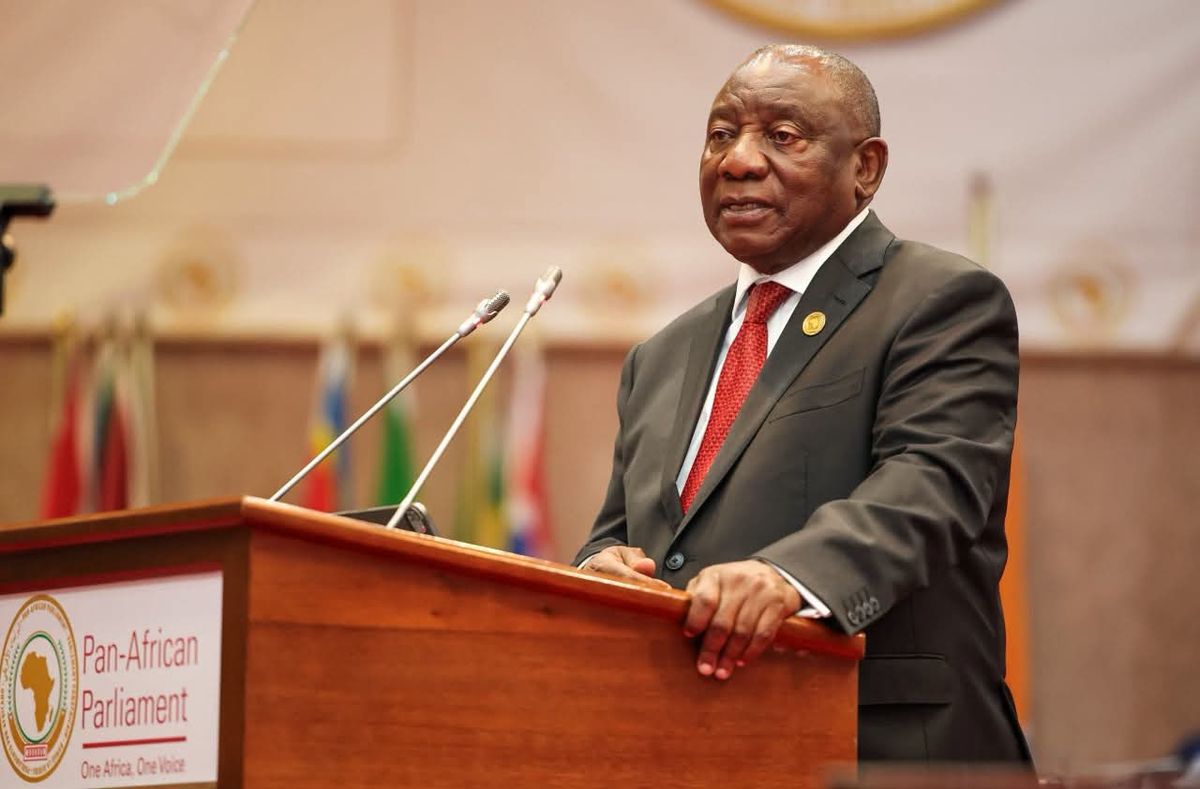
Addressing the inaugural Google Cloud Summit in Africa at the Sandton Convention Centre on Wednesday, Ramaphosa said the gathering was about more than technology, arguing that it was an opportunity to determine where Africa positions itself in a rapidly changing global economy.
“Today is about far more than a technology conference,” Ramaphosa said. “It is about where Africa chooses to position itself in the defining technological revolution of our lifetime.”
The summit, held under the theme “Google Cloud is building for Africa”, brought together government leaders, technology innovators, business executives and industry experts to discuss the growing role of cloud computing, AI and digital transformation on the continent.
More than 2,500 business leaders, developers, public-sector representatives and partners attended the event, according to Google Cloud. The summit also saw the announcement of a number of new initiatives covering AI research, digital skills, start-up funding, infrastructure and connectivity.
Africa moving beyond ‘digital catch-up’
Ramaphosa used his address to challenge the long-standing perception of Africa as a continent that primarily consumes technology developed elsewhere.
He said Africa was increasingly becoming a place where new digital solutions are developed, tested and scaled.
“Africa is no longer simply adopting technologies developed elsewhere,” the President said. “We are becoming a place where new digital solutions are imagined, tested and scaled.”
The comments come as governments and businesses across the continent increasingly turn to AI and cloud-based services to improve productivity, expand access to services and develop new digital products.
Ramaphosa compared the importance of cloud computing and AI to earlier technological breakthroughs that transformed economies.
“Railways powered the Industrial Revolution. Electricity powered the twentieth century. Cloud computing and artificial intelligence will power the economies of the twenty-first century,” he said.
For South Africa, the President's remarks form part of a broader government drive to position digitisation alongside investment, economic diversification and decarbonisation as key pillars of economic development.
Investment and digital infrastructure
The Google Cloud Summit also carried significant investment implications for South Africa.
The Presidency said Google's investment announcements were intended to support the country's investment mobilisation drive, advance the government's Digital Public Infrastructure agenda and strengthen cooperation around AI skills development and national policy across sub-Saharan Africa.
The developments come after Ramaphosa launched a second Presidential investment mobilisation drive targeting R2 trillion in new investment between 2026 and 2030.
The government has identified digitisation as one of the key areas through which South Africa can attract investment, improve competitiveness and strengthen the country's position in the global economy.
Google Cloud's presence in South Africa has also expanded, following the launch of its Johannesburg Cloud Region in 2025. The company said the new summit builds on that investment and is aimed at supporting Africa's growing digital economy.
Skills remain critical
While celebrating the opportunities presented by AI and cloud technology, Ramaphosa also stressed the importance of ensuring that Africans have the skills required to participate in the digital economy.
The rapid development of AI is expected to change the nature of work across multiple industries, increasing demand for workers with digital, technical and analytical skills.
For South Africa, where youth unemployment remains a major economic challenge, digital skills development could play an important role in creating pathways into emerging industries.
The summit therefore placed considerable emphasis on AI skilling, innovation and partnerships between government, industry and technology companies.
The government's approach is increasingly centred on the idea that investment in technology must be accompanied by investment in people.
A new opportunity for South Africa
The President's appearance at the summit also highlighted the growing relationship between government and the technology sector.
The event brought together senior government officials, including Higher Education and Training Minister Buti Manamela and Deputy Minister of Communications and Digital Technologies Mondli Gungubele, as well as Google's senior leadership and representatives from across Africa.
For South Africa, hosting the first Google Cloud Summit on the African continent represents an opportunity to showcase the country's technology ecosystem while attracting further investment into cloud infrastructure and AI.
Google Cloud has described Africa as a growing market for its technology, with the company announcing new initiatives aimed at strengthening the continent's digital infrastructure and AI capabilities.
Ramaphosa said Africa should not simply wait for the digital revolution to arrive.
“We intend to help shape it,” he told delegates.
That message is likely to remain central to South Africa's digital policy as government and industry grapple with the opportunities — and challenges — presented by artificial intelligence.
The challenge now is to translate major technology investments and ambitious policy commitments into tangible benefits for ordinary South Africans: better public services, stronger businesses, new jobs and wider access to the digital economy.
For Ramaphosa, the Google Cloud Summit was therefore not simply about showcasing the latest technology. It was about making the case that Africa can become a participant — and ultimately a shaper — of the next global technological transformation.